Short answer: yes. Snow and ice are some of the most damaging forces a roof faces — and in West Virginia, where we get real winters with heavy snowfall, freeze-thaw cycles, and ice, roofs take a beating every year. Understanding what’s happening up there can help you catch problems early and protect your home before the damage gets serious.
The Weight of Snow
Fresh light snow weighs about 3 pounds per cubic foot. Wet, heavy snow can weigh 20 pounds or more. When snow accumulates over days or weeks, the total load on your roof can become significant. Most residential roofs in West Virginia are designed to handle this, but older homes, homes with structural issues, or roofs that already have compromised framing can be at risk.
Signs of excessive snow load stress include sagging areas in the roof deck, cracks in drywall or plaster inside the home, doors or windows that suddenly stick, or creaking and popping sounds from the attic. If you notice any of these during or after a heavy snowfall, it’s worth having someone take a look.
The risk multiplies when snow partially melts and refreezes — ice is far denser and heavier than snow. A few inches of ice can exert more pressure than a foot of fresh powder.
Ice Dams: The Biggest Winter Threat
Ice dams are the most common and most damaging winter roofing problem we see in West Virginia. Here’s how they form:
- Heat from inside your home warms the upper portion of the roof deck, melting snow on that section
- The meltwater runs down toward the cold eaves and overhang
- At the cold eaves, the water refreezes, forming a ridge of ice
- More meltwater backs up behind that ice dam, unable to drain
- The standing water eventually seeps under shingles and into the home
Ice dam leaks cause water damage to ceilings, insulation, walls, and in serious cases, structural framing. The damage often isn’t noticed until after the thaw, when the water stains and soaked insulation become visible.
"Ice dams are the number one thing we're called about after a hard winter. By the time the homeowner sees the ceiling stain, the water has usually been sitting for weeks. Getting ahead of it before winter arrives makes a huge difference."
Freeze-Thaw Cycles and Shingle Damage
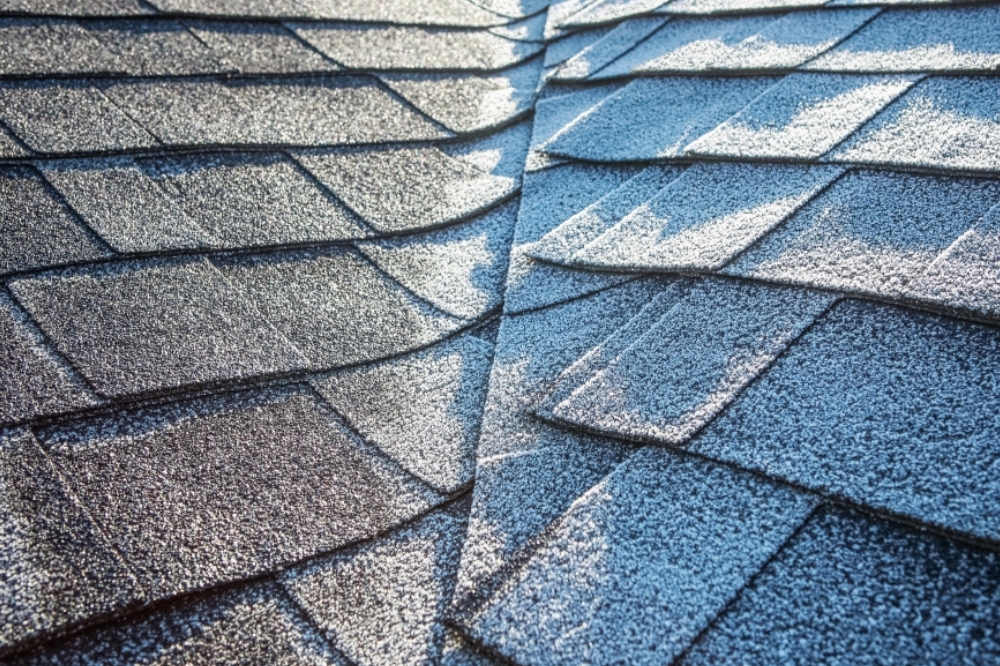
Even without ice dams, repeated freeze-thaw cycles take a toll on your roof. Water naturally works its way into tiny cracks and gaps around flashing, in aging caulk, and under lifted shingles. When that water freezes, it expands. When it thaws, the gap is a little bigger. Repeat this hundreds of times over a winter and you end up with accelerated deterioration of flashing, sealants, and the shingles themselves.
Older asphalt shingles that have lost their flexibility are especially vulnerable. They can crack and break under the stress of repeated temperature swings, particularly when they’ve already seen 15 or 20 years of use.
Gutters and Ice
When ice dams form, they often fill and overflow into gutters. Ice-loaded gutters can pull away from the fascia under the weight, bend, or be damaged beyond repair. Even if the gutters themselves don’t break, ice backup can push water up under the drip edge and rot the fascia board behind the gutter over time.
If your gutters are filling with ice every winter, it’s usually a sign of an ice dam problem — not just a gutter problem. Fixing the source (typically poor attic ventilation or inadequate insulation) solves both issues.
What You Can Do
Before Winter
- Have your roof inspected. A pre-winter inspection catches damaged shingles, deteriorated flashing, and clogged gutters before they become winter problems.
- Check your attic insulation and ventilation. Proper insulation keeps heat in your living space rather than in your attic, reducing the temperature differential that causes ice dams.
- Clean your gutters. Clear gutters drain meltwater faster and reduce ice dam formation.
During Winter
- After heavy snowfall, watch for ice dam formation at the eaves. A ridge of icicles or a band of ice along the roofline is a warning sign.
- If you have a low-pitch roof, a roof rake (used carefully from the ground) can remove snow before it melts and refreezes. Don’t use sharp tools or climb on an icy roof.
- If an ice dam forms, do not chip at it — you risk damaging the shingles. A roofing professional can safely remove it.
After Winter
- Inspect your attic for signs of water infiltration — stains, wet insulation, mold spots on the decking
- Check ceilings and walls for water stains that may have appeared during the winter
- Have a roofer look at the shingles and flashing in spring before small issues turn into bigger ones
The Bottom Line
Snow and ice do real damage to roofs — and in southern West Virginia, every winter brings the conditions for that damage. The good news is that most winter roof problems are preventable with the right prep and a quality installation underneath.
If you’re concerned about how your roof handled last winter, or you want to make sure it’s ready for the next one, TRULINE offers free inspections. We’ll check everything from the shingles and flashing to the attic ventilation and give you a clear picture of where things stand.
Not sure what your roof needs?
Schedule a free inspection and we'll give you an honest assessment — no pressure, no upselling.
Schedule a free inspectionKeep reading
More roofing tips from the TRULINE team.